Draper businesses face unique terrain challenges. The city sits at the base of the Wasatch Mountains, where commercial properties often contend with significant grade changes. From the tech corridor along I-15 to retail centers near Draper Peaks, commercial retaining wall contractors play a critical role in site development and property protection.
Pro Landscaping builds retaining walls for commercial properties throughout Draper. We understand the soil conditions, drainage patterns, and engineering requirements specific to this area. When your business needs structural support that lasts, you need a contractor who knows the local landscape.
Why Draper Businesses Need Professional Retaining Walls
Commercial properties in Draper rarely sit on flat ground. The natural topography creates both opportunities and challenges for business owners. A well-designed retaining wall transforms unusable slopes into functional space while protecting your investment.
Managing Slopes on Commercial Properties
Look at any major development along Draper Parkway. You will see retaining walls working hard behind the scenes. These structures hold back tons of earth, creating level areas for buildings, parking lots, and pedestrian access.
Slopes become liabilities without proper management. Water flows downhill, carrying soil with it. This erosion threatens foundations, undermines pavement, and creates safety hazards. Commercial retaining wall contractors engineer solutions that redirect these forces safely.
The Traverse Mountain area showcases this challenge perfectly. Properties here often require multiple tiered walls to manage elevation changes exceeding 20 feet. Each tier must work together as a system, distributing lateral pressure while allowing proper drainage.
Flat, usable space commands premium value in commercial real estate. A professional retaining wall can transform a steep, unusable lot into prime commercial property. The return on investment often exceeds the construction cost within a few years.
Protecting Buildings and Parking Areas from Erosion
Erosion does not stop at property lines. When soil moves on a commercial site, it threatens everything in its path. Buildings settle unevenly. Parking lots crack and buckle. Sidewalks become trip hazards. Liability increases.
Retaining walls create a permanent barrier against these problems. They hold soil in place during heavy rain, spring snowmelt, and irrigation cycles. This protection extends the life of every other improvement on your property.
Draper receives significant precipitation, especially during spring months. Water saturation increases lateral soil pressure dramatically. Walls designed without accounting for this hydrostatic pressure often fail within years. Proper engineering includes drainage systems that relieve this pressure before it causes damage.
We have seen commercial properties lose thousands of dollars to erosion damage that a properly installed retaining wall would have prevented. The wall becomes an insurance policy for your entire site investment.
Types of Commercial Retaining Walls We Build
Different applications require different wall systems. The right choice depends on wall height, soil conditions, aesthetic requirements, and budget. Commercial retaining wall contractors should offer multiple options and explain the advantages of each.
Concrete Block and Segmental Walls
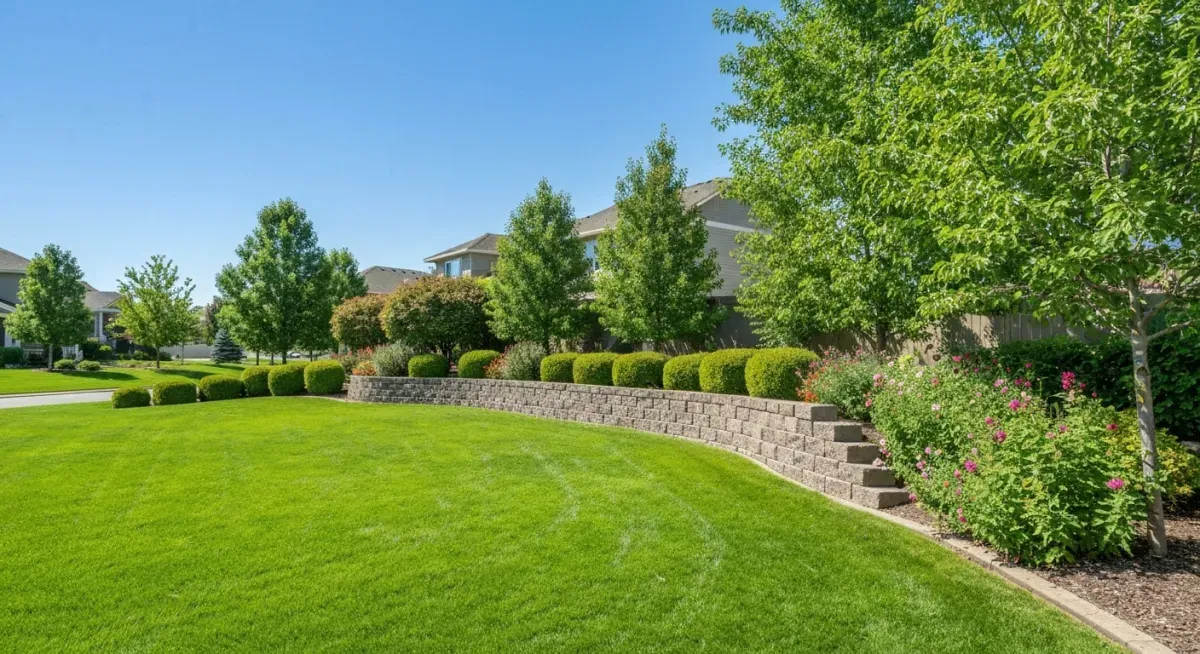
Segmental retaining walls use interlocking concrete blocks that stack without mortar. The blocks rely on their mass and the friction between units for stability. This system works well for walls up to about 10 feet, though taller walls require geogrid reinforcement.
These walls offer several advantages for commercial applications. Installation proceeds quickly compared to poured concrete. The blocks come in various colors and textures to complement building architecture. Repairs are straightforward since individual blocks can be replaced.
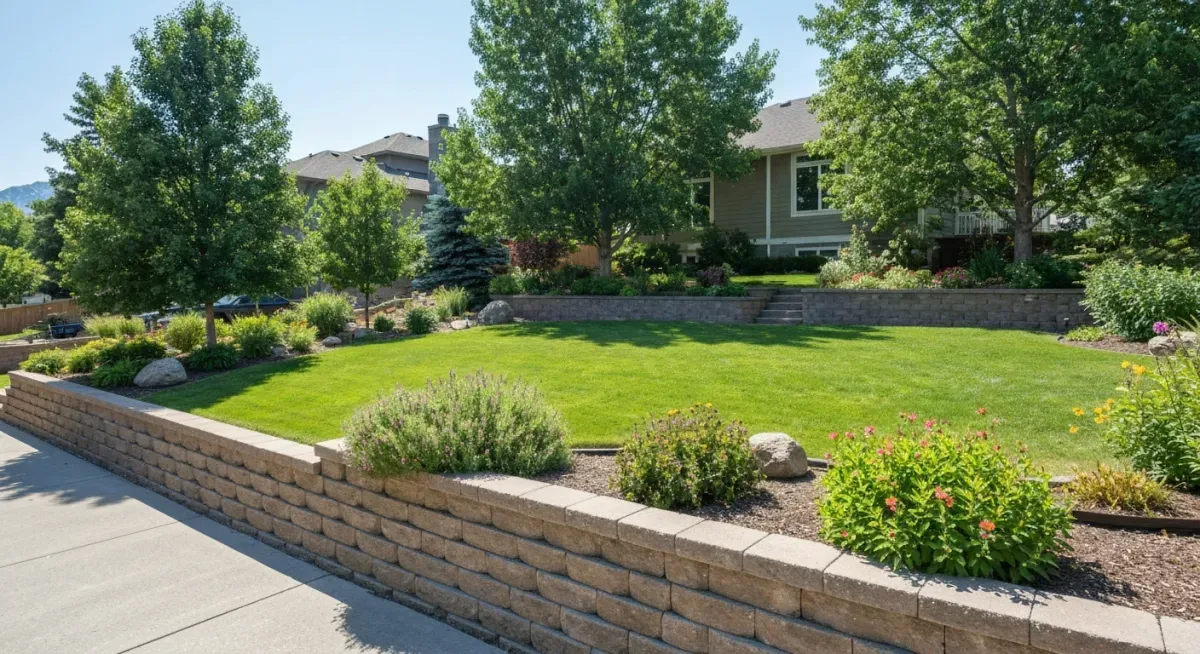
For Draper businesses concerned about aesthetics, segmental walls provide design flexibility. You can create curves, corners, and terraced sections easily. Many blocks mimic the appearance of natural stone at a fraction of the cost.
The retaining wall systems we install use high-quality blocks rated for freeze-thaw cycles. This matters in Utah, where temperatures swing dramatically between seasons. Inferior products crack and spall within a few winters.
Natural Stone Retaining Walls
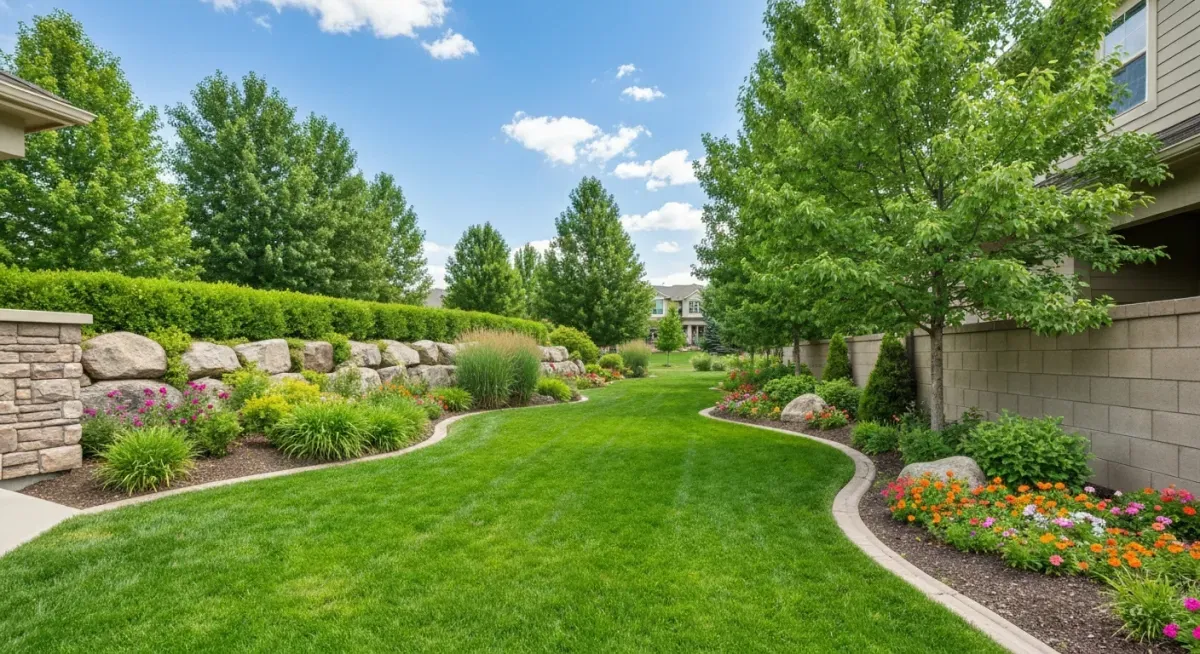
Natural boulder walls make a statement. They integrate commercial properties into the mountain landscape that defines Draper. These walls use large stones, often locally sourced, arranged to create both structural support and visual impact.
Boulder walls work best for lower heights and situations where a natural appearance matters. They suit properties near trails, parks, or residential areas where blending with surroundings is important. Many developments along the Jordan River Parkway use this approach.
The installation process requires heavy equipment and experienced operators. Each boulder weighs thousands of pounds. Proper placement creates a stable structure that relies on stone mass rather than mortar. Poor placement leads to shifting and eventual failure.
Natural stone costs more than manufactured blocks but lasts indefinitely. These walls require virtually no maintenance beyond occasional inspection. The stones will not fade, crack, or deteriorate like manufactured products can.
Poured Concrete Walls for Heavy-Duty Applications
When height and load requirements exceed what block systems can handle, poured concrete becomes necessary. These engineered structures can support significant lateral pressures and surcharge loads from buildings or parking areas above.
Poured concrete walls require engineering design specific to site conditions. Soil testing determines bearing capacity and lateral pressure coefficients. The engineer sizes footings, specifies reinforcement, and designs drainage systems accordingly.
These walls take longer to install. Formwork must be built, reinforcement placed, and concrete poured in controlled conditions. Curing requires time before backfilling can proceed. The result is a monolithic structure that can stand for generations.
Many commercial applications combine wall types. A poured concrete foundation might support a segmental block face wall. This approach achieves structural requirements while maintaining aesthetic appeal. It also often reduces costs compared to a fully poured structure.
What to Expect from Commercial Retaining Wall Installation
Commercial projects differ significantly from residential work. The scale, engineering requirements, and regulatory oversight all increase. Understanding the process helps you plan timelines and budgets realistically.
Site Assessment and Engineering Requirements
Every commercial retaining wall project begins with site assessment. We evaluate existing grades, soil conditions, drainage patterns, and utility locations. This information drives design decisions.
Walls over four feet typically require engineering. A licensed professional engineer designs the wall system, specifying materials, dimensions, and reinforcement. They stamp drawings that become part of the permit application. This engineering protects you from liability and ensures the wall performs as intended.
Soil testing often accompanies the engineering process. Geotechnical reports reveal bearing capacity, soil classification, and groundwater conditions. Sandy soils behave differently than clay. Shallow bedrock changes foundation requirements. These factors directly impact cost and construction approach.
Our hardscaping team works directly with engineers throughout this process. We provide field information they need for accurate designs. We also review plans before construction to identify potential issues early.
Permits and Local Regulations in Utah
Draper requires permits for retaining walls over four feet. The city reviews engineering documents, site plans, and construction details before issuing approval. This process takes several weeks, sometimes longer for complex projects.
Utah also regulates construction near waterways, wetlands, and slopes exceeding certain grades. The Jordan River corridor and Corner Canyon areas have additional requirements. Failing to obtain proper permits creates serious problems, including stop-work orders and required demolition.
Commercial retaining wall contractors should handle permit applications as part of their service. We prepare required documents, respond to city questions, and schedule inspections. This expertise speeds the process and prevents costly delays.
Building code compliance matters beyond just getting permits. Inspectors verify that construction matches approved plans. Walls that fail inspection require correction before backfilling. Starting with proper engineering and using qualified contractors prevents these problems.
Timeline for Commercial Projects
Commercial retaining wall installation takes longer than most clients expect. The design and permitting phase often runs six to eight weeks. Construction duration depends on wall length, height, and site access.
A typical commercial wall project might proceed as follows. Site assessment and engineering take three to four weeks. Permit review adds another three to four weeks. Mobilization and excavation require one to two weeks. Wall construction proceeds at roughly 20 to 30 linear feet per day for block walls, slower for poured concrete.
Weather impacts schedules significantly. We cannot pour concrete or compact backfill in freezing conditions. Heavy rain stops excavation work. Spring and fall offer the most predictable working conditions along the Wasatch Front.
Planning ahead makes a difference. Projects that begin engineering in winter can break ground as soon as spring conditions allow. Waiting until spring to start planning pushes construction into summer or even fall.
How to Choose the Right Contractor Along the Wasatch Front
Not all contractors who build retaining walls should tackle commercial projects. The stakes are higher. The engineering is more complex. The consequences of failure extend beyond the property line.
Questions to Ask Before Hiring
Start with licensing and insurance. Utah requires contractors to hold appropriate licenses for the work they perform. Commercial projects need contractors with adequate liability coverage, typically at least one million dollars. Ask for certificates and verify coverage with the insurance company directly.
Experience matters significantly. Ask how many commercial retaining walls the contractor has built. Request references from similar projects. Visit completed walls if possible. A contractor with extensive residential experience may lack the equipment, crews, and project management skills commercial work demands.
Discuss engineering relationships. Established commercial retaining wall contractors have working relationships with structural engineers. They know whose designs work in the field and who provides responsive service when questions arise.
Ask about project management. Who will supervise construction daily? How will you receive progress updates? What happens if problems arise? Commercial projects require dedicated supervision, not a foreman splitting attention across multiple jobsites.
Signs of Quality Workmanship
Inspect previous work before hiring. Quality shows in the details. Blocks should align precisely. Drainage provisions should be visible. Backfill should be compacted in lifts, not dumped in place.
Look for proper base preparation. The foundation determines wall longevity. Quality contractors excavate to undisturbed soil, install appropriate base material, and compact thoroughly. Shortcuts here cause settlement and eventual failure.
Check drainage systems. Water destroys retaining walls more reliably than any other force. Quality walls include perforated pipe at the base, drainage aggregate behind the wall, and outlets that direct water away from the structure.
Our work demonstrates the attention to detail we bring to every installation. You can see how we handle various site conditions and retaining wall design requirements.
Commercial Retaining Wall Costs and Investment Value
Commercial retaining walls represent significant investments. Understanding cost factors helps you budget accurately and recognize fair pricing when you see it.
Factors That Affect Project Pricing
Wall height drives cost more than any other factor. Taller walls require deeper foundations, more material, and often geogrid reinforcement. A wall twice as tall costs more than twice as much.
Site access affects pricing substantially. Can equipment reach the wall location easily? Is there room for material staging? Must crews work around existing improvements? Difficult access adds time and cost.
Material selection ranges widely. Basic concrete blocks cost less than premium architectural units. Natural stone commands a significant premium. Poured concrete falls between these options depending on engineering requirements.
Soil conditions impact costs unpredictably. Poor bearing capacity requires deeper footings or soil modification. High groundwater demands enhanced drainage. Existing fill may need removal and replacement. Geotechnical surprises cause budget overruns.
Long-Term Savings from Proper Installation
Cheap walls prove expensive over time. Failures require emergency repairs. Damage extends to adjacent improvements. Liability exposure increases. Insurance claims raise premiums.
Properly installed commercial retaining walls last 50 years or more with minimal maintenance. They protect building foundations, parking surfaces, and landscaping investments throughout their life. They maintain property values and curb appeal.
Consider the cost of alternatives. Without a wall, slopes require regular regrading. Erosion repairs become annual expenses. Unusable slope areas generate no revenue. The wall often pays for itself within years.
Working with experienced commercial retaining wall contractors protects your investment from the start. We engineer solutions that account for actual site conditions, not theoretical assumptions. We build to specifications that ensure longevity.
Contact Pro Landscaping to discuss your commercial retaining wall project in Draper. We provide detailed proposals that explain exactly what you are getting and why it matters.