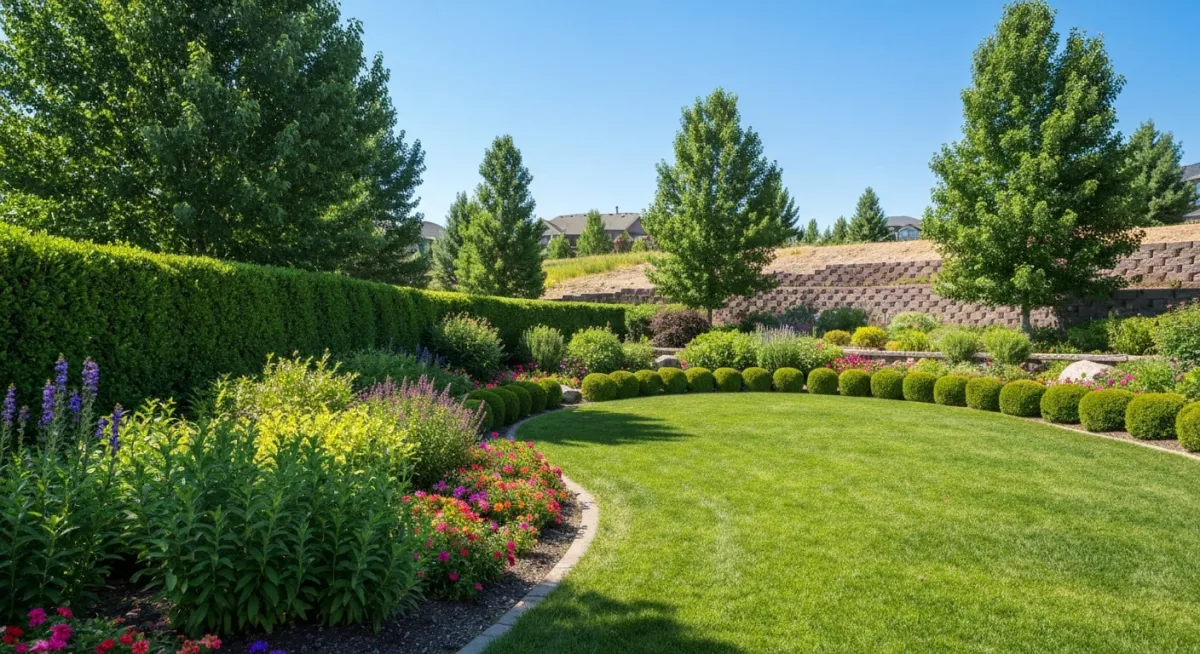
Orem sits at the base of Mount Timpanogos, where sloped terrain and expansive clay soils create unique challenges for property owners. If your yard slopes toward your foundation or you are losing usable space to erosion, retaining wall installation in Utah is the solution that protects your investment while transforming your landscape.
The benches and hillsides throughout Orem neighborhoods like Cascade, Heatheridge, and Vineyard present both opportunities and obstacles. A properly installed retaining wall turns problem slopes into functional outdoor living space. It stops soil movement. It creates level areas for patios, gardens, or lawn. And it adds serious curb appeal to your property.
This guide covers everything Orem homeowners need to know about retaining wall installation. From material options to cost factors to finding the right contractor.
Why Orem Properties Need Retaining Walls
Orem's geography makes retaining walls more than a landscaping upgrade. They are often a necessity.
Managing Slopes Along the Wasatch Front
The eastern benches of Orem climb steeply toward the mountains. Properties along Canyon View Drive, Oak Hills, and the upper Carterville area deal with significant grade changes. Without proper soil retention, gravity wins.
Sloped yards lose usable space every year to downhill soil migration. Heavy spring runoff accelerates the problem. Retaining walls create level terraces that maximize your property's potential while preventing costly foundation damage from soil pressure against your home.
Preventing Soil Erosion in Utah Clay
Utah County soils are notorious for their high clay content. This clay expands when wet and contracts when dry. The constant movement destabilizes slopes and pushes against structures.
Orem properties near the Provo River corridor and throughout the Geneva Road area deal with particularly challenging soil conditions. A professionally engineered retaining wall with proper drainage handles these soil pressures safely. Without one, you risk washouts during summer thunderstorms and ongoing foundation settlement issues.
Types of Retaining Walls for Utah Landscapes
Choosing the right material depends on your wall's height, your aesthetic preferences, and your budget. Here are the three most common options for [retaining wall installation in Utah](https://prolandscapingut.com/retaining-walls).
Concrete Block Walls
Segmental retaining wall blocks are the most popular choice for Orem homeowners. Brands like Allan Block, Versa-Lok, and Keystone interlock without mortar. This makes them ideal for Utah's freeze-thaw cycles.
The interlocking design allows slight movement during soil expansion without cracking. Block walls work for heights from two feet to over fifteen feet when properly engineered with geogrid reinforcement.
They come in various colors and textures that complement Utah's natural landscape. Installation is faster than poured concrete, which keeps labor costs reasonable.
Natural Stone Walls
Natural stone walls use locally quarried materials like Utah sandstone, limestone, or moss rock. They blend seamlessly with the Wasatch mountain backdrop that defines Orem's scenery.
Stone walls require skilled masons who understand how to lock irregular shapes together. They cost more than block walls but create an organic, timeless appearance that increases property value.
For shorter walls under four feet, dry-stacked stone works well. Taller walls need mortar joints and proper reinforcement to handle Utah's soil pressures safely.
Poured Concrete Walls
Poured concrete delivers maximum strength for the most demanding applications. Commercial properties, extremely tall walls, and situations requiring precise engineering often call for poured concrete.
These walls can be finished with exposed aggregate, stamped patterns, or veneered with stone or brick. The structural capabilities exceed block or natural stone, making them ideal for high-load applications.
The downside is cost. Poured concrete walls require forms, rebar installation, and often professional engineering stamps. But for certain Orem properties with severe slope conditions, they are the only practical solution.
The Retaining Wall Installation Process
Professional retaining wall installation follows a proven sequence. Each step matters for long-term performance.
Site Assessment and Permits
Every project starts with evaluating your specific conditions. Soil type, slope angle, drainage patterns, and underground utilities all affect the design.
Orem City requires building permits for retaining walls over four feet tall. Walls near property lines may need setback variances. Your contractor handles permit applications and ensures the design meets International Building Code requirements.
A soil analysis may be required for taller walls. This determines bearing capacity and helps engineers specify proper footing dimensions and reinforcement schedules.
Excavation and Base Preparation
The foundation determines everything. Crews excavate below frost line, typically 30 inches in Orem, to prevent heaving during winter freezes.
A compacted gravel base provides drainage and distributes the wall's weight evenly. This base must be perfectly level. Even small deviations compound as the wall rises, creating alignment problems that weaken the structure.
Proper excavation also creates space behind the wall for drainage materials. Skipping this step guarantees future problems.
Drainage System Installation
Drainage is the most critical factor in retaining wall longevity. Utah's clay soils trap water, creating hydrostatic pressure that pushes against walls. Without relief, even well-built walls eventually fail.
A perforated drain pipe runs along the base, surrounded by clean gravel. This collects groundwater and channels it away from the wall. Weep holes through the wall face provide additional pressure relief.
The drain system connects to a daylight outlet or storm drain. This detail separates professional [hardscaping](https://prolandscapingut.com/hardscaping) from amateur work that fails within years.
Wall Construction and Backfill
With the base prepared and drainage in place, wall construction proceeds course by course. Each block or stone is set level and properly aligned.
For walls over four feet, geogrid reinforcement layers extend back into the soil at specified intervals. This creates a reinforced soil mass that resists sliding and overturning forces.
Backfill uses angular gravel directly behind the wall, transitioning to native soil further back. Compaction happens in lifts, never all at once. Each six-inch layer gets compacted before adding the next.
Caps or coping finish the top, shedding water away from the wall face.
Cost Factors for Retaining Wall Installation in Utah
Budgeting accurately requires understanding what drives costs up or down.
Wall Height and Length
This is the biggest cost driver. Taller walls require more materials, deeper footings, and often engineering. A wall over four feet tall typically costs two to three times more per linear foot than a two-foot wall.
Most Utah retaining wall projects range from $50 to $150 per square foot of wall face. A 50-foot long wall standing four feet tall has 200 square feet of face area, putting the project between $10,000 and $30,000 depending on other factors.
Material Selection
Concrete blocks offer the best value for most applications. Natural stone costs 25 to 50 percent more. Poured concrete with architectural finishes can exceed natural stone pricing.
Material costs fluctuate seasonally. Ordering materials during winter months for spring installation sometimes saves money.
Site Accessibility
Can equipment reach your backyard? Tight access through side yards or gates adds labor time. Some Orem properties require hand-carrying materials, which increases costs significantly.
Sloped sites require more excavation. Rocky soil conditions slow digging. Utility relocations add expense and scheduling complications.
How Long Retaining Walls Last in Utah Weather
A properly installed retaining wall handles Utah's extreme temperature swings, heavy snow loads, and intense summer sun for decades. Lifespan depends on materials and construction quality.
Concrete block walls typically last 50 to 100 years. The blocks themselves are nearly indestructible. Failures usually trace back to drainage problems or improper base preparation.
Natural stone walls can last centuries when well-built. Many European stone walls have stood for 500 years or more. The weak point is usually mortar joints that need repointing every few decades.
Poured concrete walls match or exceed block wall longevity when properly reinforced and waterproofed.
Utah's freeze-thaw cycles stress any masonry structure. We experience over 100 freeze-thaw cycles annually along the Wasatch Front. Using materials rated for these conditions and installing proper drainage protects your investment through decades of Utah winters.
Choosing a Retaining Wall Contractor in Orem
The right contractor makes the difference between a wall that lasts generations and one that fails within years.
Questions to Ask Before Hiring
Before signing a contract, ask these essential questions:
- Is your company licensed and insured? Utah requires contractors to hold a valid license for work exceeding $3,000. Verify the license number through the Utah Division of Occupational and Professional Licensing.
- What experience do you have with Utah soil conditions? A contractor from out of state may not understand our clay soil challenges or frost depth requirements.
- Can you provide references from Orem or Utah County projects? Drive by completed walls that have weathered a few winters and see how they look.
- Who designs walls over four feet? Proper engineering prevents failures. Reputable contractors work with licensed engineers when required.
- Will you provide a detailed written proposal? Vague bids lead to surprises. Materials, drainage specifications, and warranty terms should be clearly stated.
Signs of Quality Workmanship
Examine completed projects for these indicators of professional work.
Walls should be perfectly plumb and level. Waviness or leaning indicates rushed installation. Caps should align precisely without gaps or overhangs.
Look for visible drainage outlets. No outlets means no drainage system, which guarantees eventual failure.
Check the base of the wall where it meets grade. Proper installations show clean transitions with no soil washing against the wall face.
Ask about their compaction methods. Professional crews use plate compactors or jumping jacks on every lift. Hand tamping is inadequate for anything beyond decorative garden borders.
Pro Landscaping has built retaining walls throughout Orem and [Utah County](https://prolandscapingut.com/utah-county) for years. We understand the local soil conditions, permit requirements, and climate challenges that affect every project. Our [landscape design and build](https://prolandscapingut.com/landscape-design-build) approach ensures your retaining wall integrates with your overall property vision.
Whether you need a small garden terrace or an engineered hillside solution, professional retaining wall installation in Utah protects your property and expands your usable outdoor space. [Contact us](https://prolandscapingut.com/contactus-page) for a site evaluation and see what is possible for your Orem property.